About the QC4G Curriculum
Here are the detailed insight for the curious seeking a deeper understanding of how Quantum Computing 4 the Gifted (QC4G) is structured, taught, and applied in practice. Here we explain how it works and why it is constructed as a unified learning system.
Details
The QC4G curriculum is designed as a single, coherent instructional system rather than a modular collection of topics. Each section introduces specific conceptual frameworks that remain active and necessary throughout the remainder of the course.
Section I ♆ Foundations of Quantum Thought
This section establishes the intellectual foundation required for all subsequent material. Learners develop the ability to separate classical intuition from quantum reasoning.
- Distinguishing physical systems, mathematical representations, and computational models
- Understanding why classical metaphors fail in quantum contexts
- Interpreting superposition as structured coexistence rather than randomness
- Recognizing quantum systems as geometric state spaces
The goal is to prevent classical misconceptions from contaminating later formalism.
Section II ♆ State Space and Representation
This section introduces the representational language of quantum mechanics and computation. Emphasis is placed on meaning conveyed through representation rather than symbolic syntax.
- Dirac notation as a reasoning framework
- Hilbert space as the setting for computation
- State vectors, basis selection, and dimensionality
- Interference as a phase-driven structural phenomenon
Section III ♆ Operators and Gates
Learners explore how quantum states evolve under transformations. Focus shifts from symbolic manipulation to structural understanding.
- Unitary evolution and reversibility
- Hermitian operators and observables
- Orthogonality and information preservation
- Gate composition as operator products
Section IV ♆ Measurement and Probability
Measurement is treated as a mathematical operation with well-defined consequences, not as an interpretive mystery.
- Measurement postulates
- Probability amplitudes versus probabilities
- Expectation values and statistical interpretation
- Collapse as projection with irreversible consequences
Section V ♆ Circuits, Multi-Qubit Systems, and Algorithms
All prior concepts are integrated into full computational systems. This section prepares learners for modern, hardware-aware quantum computing.
- Quantum circuits as composed transformations
- Tensor-product structure and scaling
- Entanglement as state inseparability
- Controlled operations and universality
- Variational circuits, VQE, and SPSA optimization
Assessments and Knowledge Checks
Assessment is integrated throughout the curriculum and evaluates conceptual understanding .
- Correct mental models of state and measurement
- Ability to predict outcomes prior to calculation
- Understanding of operator structure and circuit behavior
- Cross-section conceptual linkage via knowledge-graph alignment
The QC4G Qubit
What it is
The QC4G Qubit is a physical and visual instructional reference model inspired by the Bloch sphere. It represents quantum states as spatial orientations rather than symbolic labels.
It is not a simulator, toy, or demonstration aid. It is a cognitive reference model. Is it doing what I think it is doing.
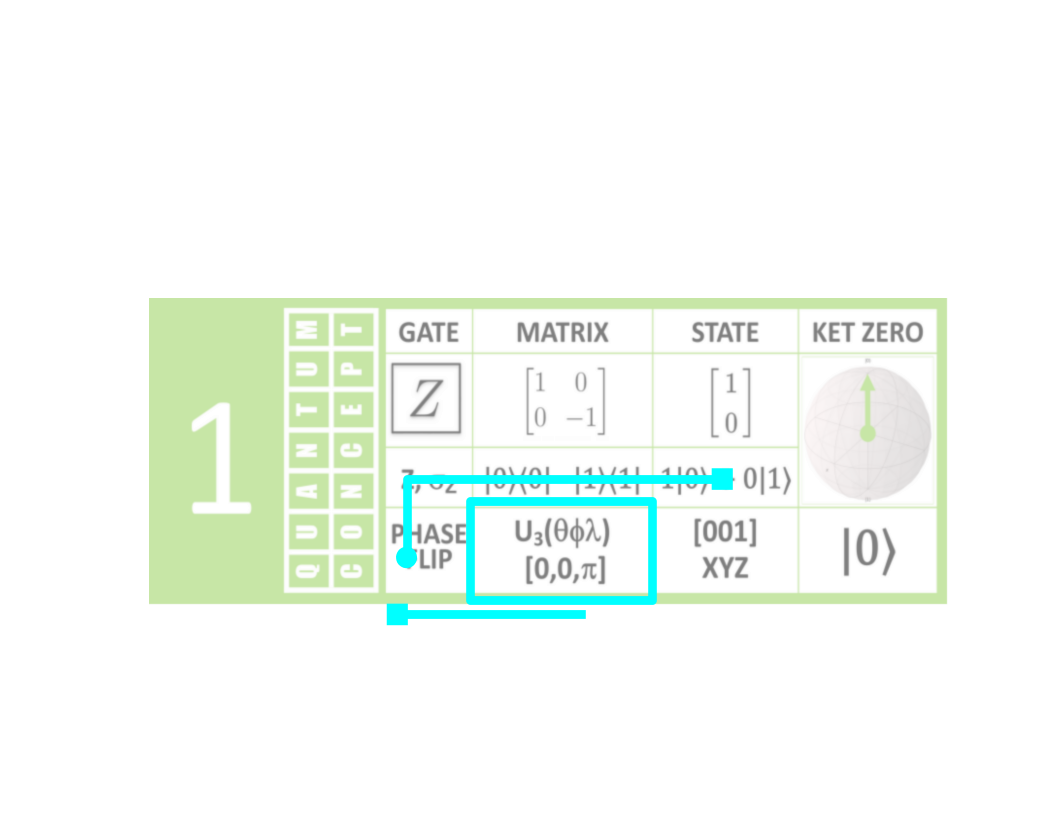
Label 1. Z Gate (Pauli-Z): Phase Flip Operator
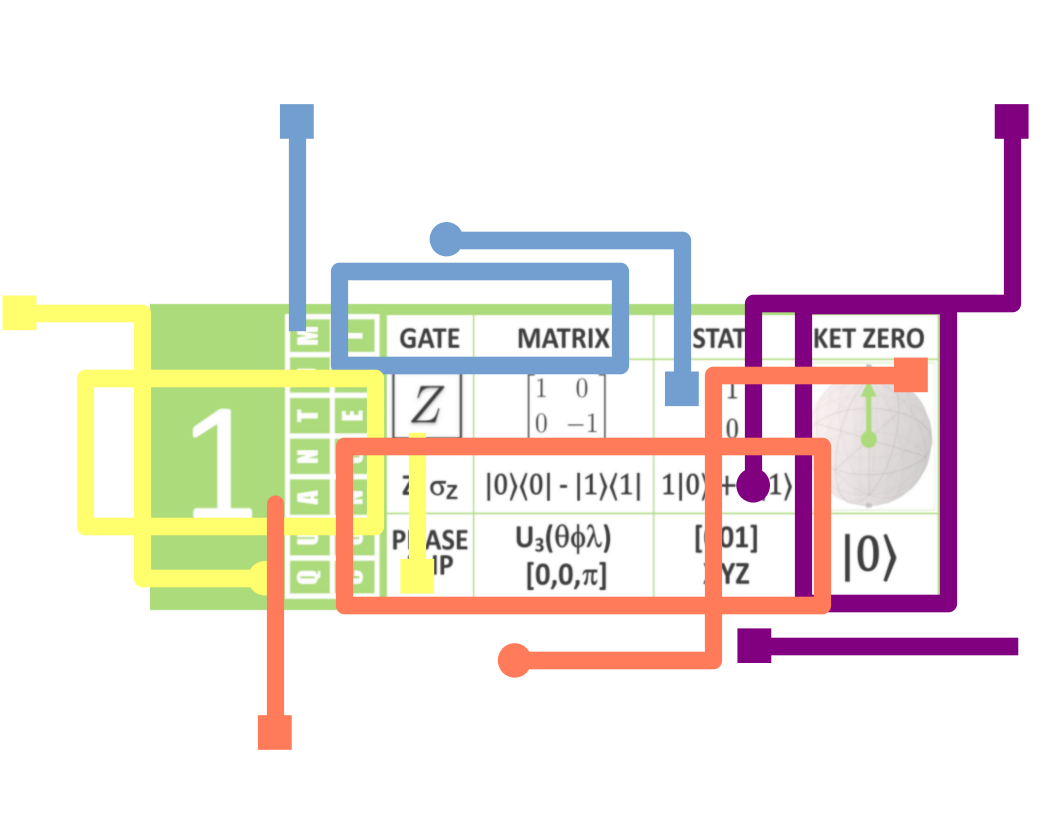
Understanding your labels:
The diagram is a representation bridge:
One quantum gate → shown simultaneously as circuit symbol, matrix, projector, state vector, density matrix, Bloch vector placement, universal gate parameters, and physical effect.
It's here to help your train representation fluency, not memorization.
Why?
Many learners struggle with quantum mechanics due to the absence of intuition about state space, dimensionality, basis, transformation, and particularly measurement.
The QC4G Qubit externalizes these abstractions, enabling spatial reasoning alongside formal mathematical development.
Instruction
Physical starting point
Use your QC4G Qubit. Ready ❯❯❯❯ Set ˚₊· ͟͟͞͞➳❥ Go
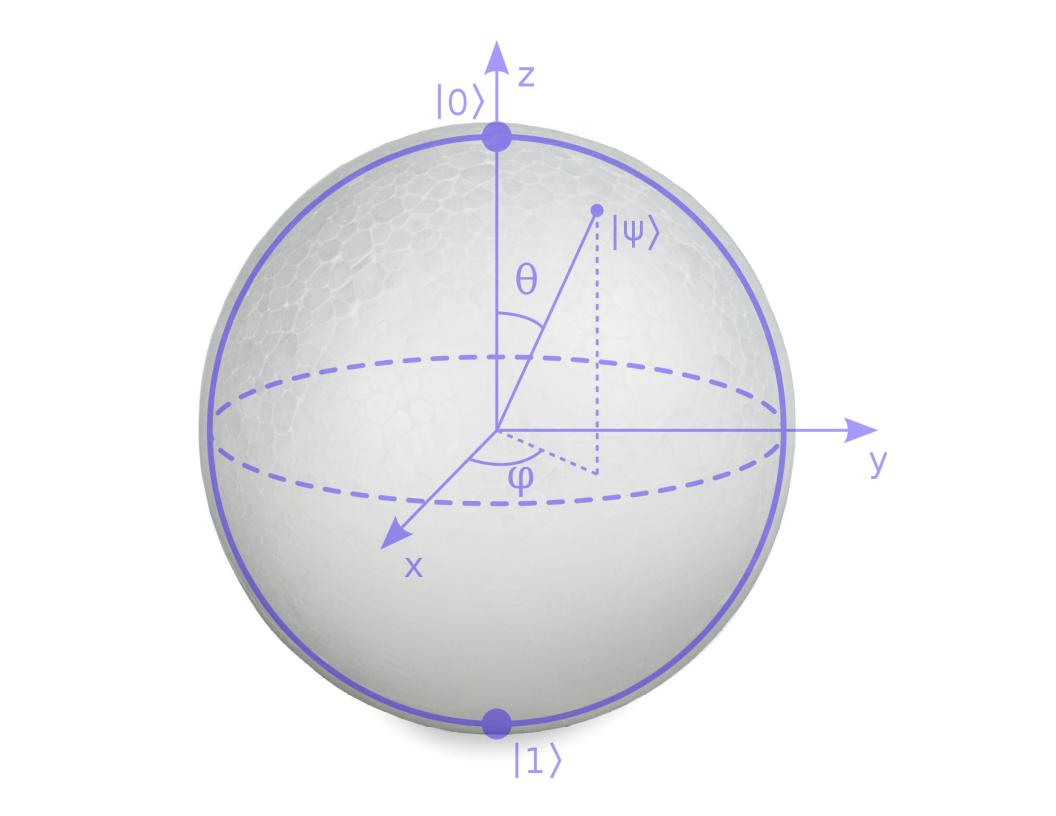
- Hold the styrofoam sphere so the green ∣0⟩ handle points up.
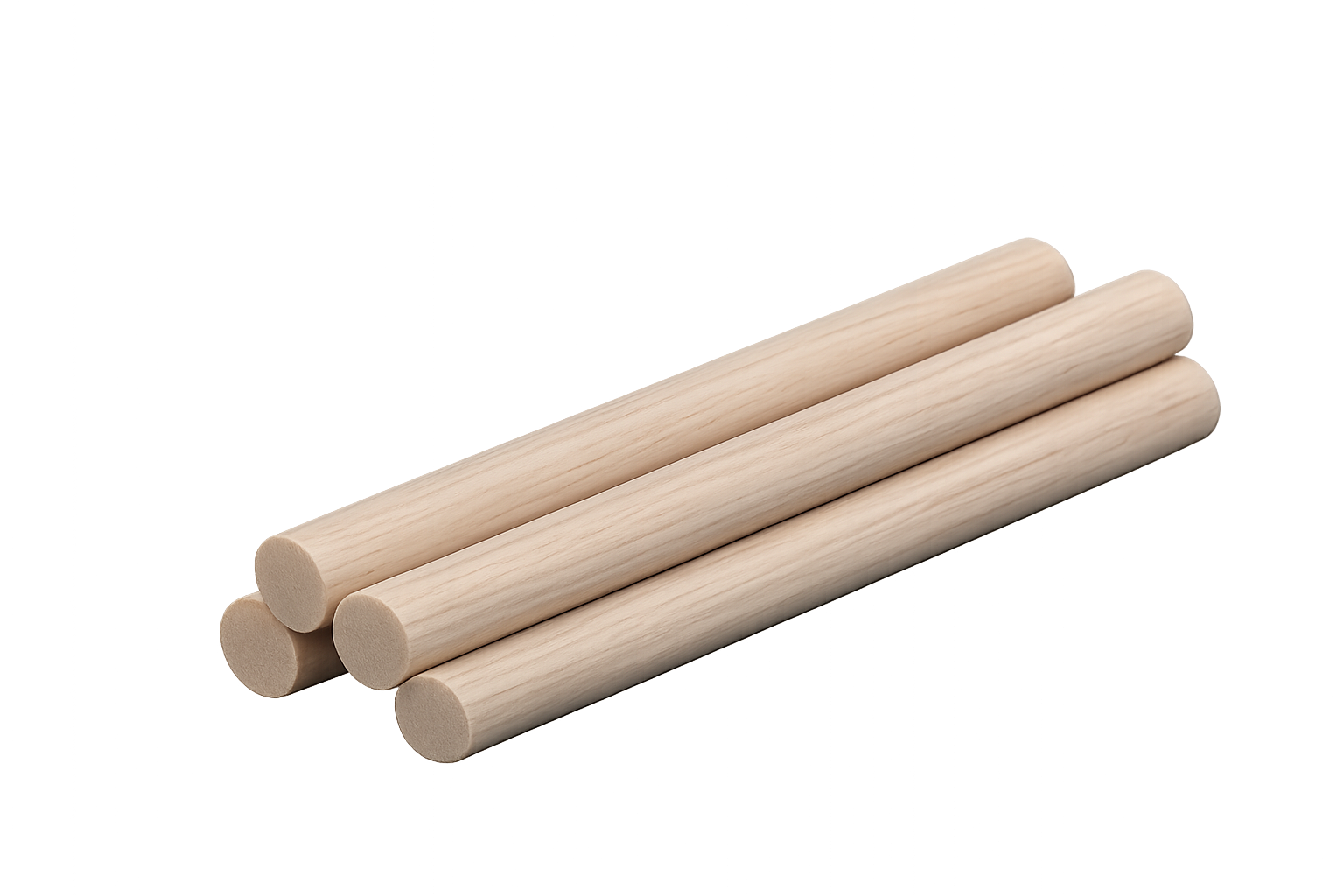
- Insert the wooden state-vector arrow into the ∣0⟩ handle.
- This defines the default starting state ∣0⟩ in your hands.
- All lesson definitions physically reference this setup.
Your QC4G Qubit makes “state” KetZERO \(|0\rangle \) a concrete, touchable object, not a symbol on a page.
| Component | Role |
|---|---|
|
QC4G Qubit Foam Sphere (∣0⟩ Up, North, \( Z^{+}\) ) Mapping Sets the reference orientation. The green label ∣0⟩ handle pointing up defines the “north pole” of your QC4G Qubit Bloch sphere. |
|
State-Vector Arrow Inserted the wooden vector into the ∣0⟩ handle, it embodies the quantum state ∣0⟩ as a physical direction, that is initialized. |
How It Is Used Across the Curriculum
- Representing quantum states independently of measurement
- Visualizing basis changes and coordinate descriptions
- Modeling gate operations as rotations and reflections
- Understanding non-commutativity through orientation
- Demonstrating measurement as projection
Its role evolves with the curriculum, scaling conceptually alongside increasing formalism.
Transformations
Quantum operations
- Place the arrow anywhere on the QC4G Qubit.
-
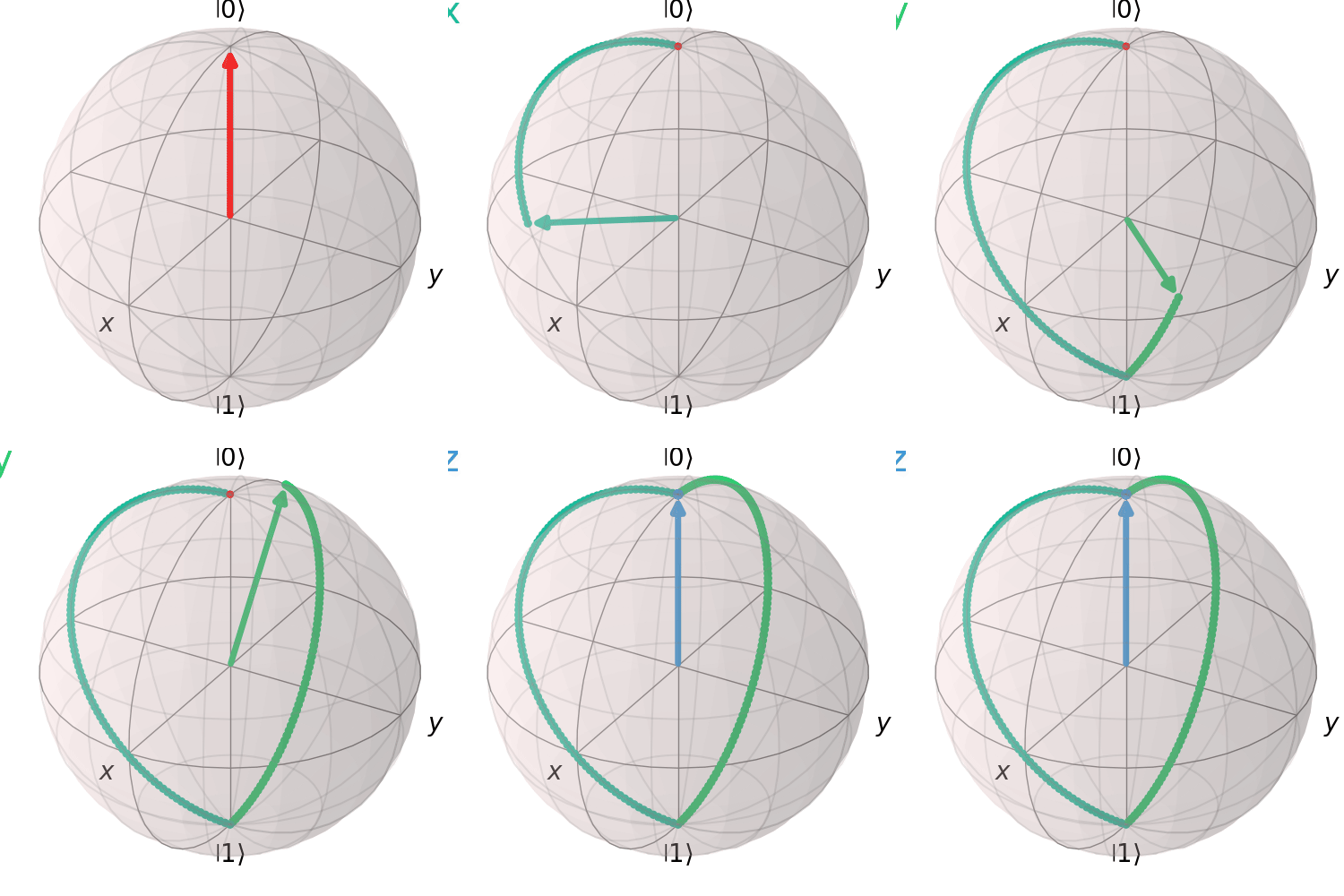
Now rotate the sphere around:
- The X-axis using the ∣+⟩/∣−⟩ hollow handles
- The Y-axis using the ∣+i⟩/∣−i⟩ hollow handles
- The Z-axis using the ∣0⟩/∣1⟩ handles
- Each rotation produces a new state.
- Classical bits cannot be transformed by rotation; they only flip.
- Quantum states evolve continuously, and your QC4G Qubit sphere demonstrates this mechanics with bare hands.
- This is the emergence of quantum operations.
| Component | Role |
|---|---|
|
The ∣0⟩/∣1⟩, ∣+⟩/∣−⟩, and ∣+i⟩/∣−i⟩ handle pairs physically define the Z, X, and Y axes, turning abstract unitary transformations into literal rotations of the QC4G sphere. |
Classroom vs. Self-Study Use
In classroom environments:
- Provides a shared reference for discussion
- Reduces abstraction barriers
- Supports visual and kinesthetic learning
In self-directed study:
- Supports prediction-first reasoning
- Validates intuition before formal calculation
- Reduces reliance on memorization
Label 1. Z Gate (Pauli-Z) Phase Flip Operator
U3 Representation:
U₃(θ,φ,λ) = U₃(0,0,π)
This shows that the Z gate is a special case of the universal single-qubit gate.
• (θ = 0): no latitude change
• (φ = 0)
• (λ = π): phase shift
This connects gate libraries to hardware-level parameterization.
Teaching & Use Cases
For Educators
- Primary curriculum for introductory quantum computing
- Supplement for physics, computer science, or engineering programs
- Visual bridge between theory and computation
The curriculum is structured, scaffolded, and assessment-ready.
For Self-Directed Learners
- Clear learning arc without fragmented resources
- Integrated intuition, mathematics, and computation
- Self-paced progression with conceptual checkpoints
No prior quantum background is required.
For Institutions and Programs
- Undergraduate and early graduate instruction
- Professional development and upskilling
- Outreach and enrichment programs
The single-access model simplifies deployment and administration.